How to Pick the Best Auto Sales Dealership Without the Hassle
Find the Best Auto Sales Dealership for a Simple Used-Car Purchase
The best auto sales dealerships make it easy to find a reliable used car, understand the full price, value your trade-in, and explore financing without high-pressure tactics.
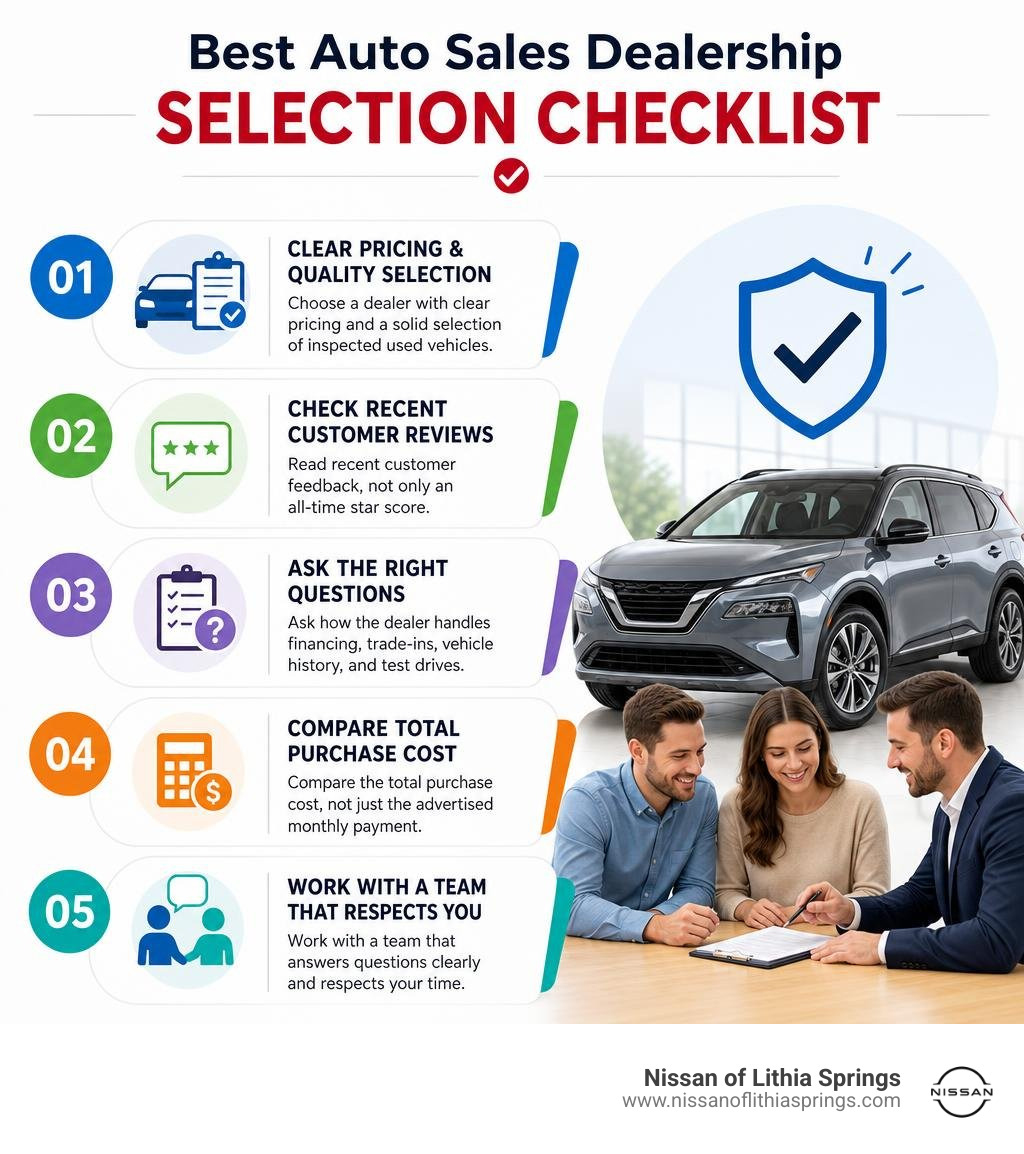
For West Atlanta drivers, the quick checklist is simple:
- Choose a dealer with clear pricing and a solid selection of inspected used vehicles.
- Read recent customer feedback, not only an all-time star score.
- Ask how the dealer handles financing, trade-ins, vehicle history, and test drives.
- Compare the total purchase cost, not just the advertised monthly payment.
- Work with a team that answers questions clearly and respects your time.
A great dealership is not always the biggest lot or the lowest online number. It is the one that matches your needs - whether that is a dependable Nissan commuter car, a family SUV, or a fuel-saving vehicle - while making each part of the purchase easy to verify.
I am Vaughn Smith, Marketing Director at Smith Automotive Group, with more than six years of experience using performance data, CRM systems, and customer-experience insights to improve best auto sales experiences across dealership operations. Here is how to separate a trustworthy dealer from one that creates more work than value.
Key Factors That Define the Best Auto Sales Dealerships
When searching for top-tier used car dealers, it helps to understand what separates an exceptional auto retailer from an average one. Exceptional dealerships do not happen by accident. They are built on a foundation of long-standing dealership history, strong organizational culture, and a clear dedication to customer satisfaction.
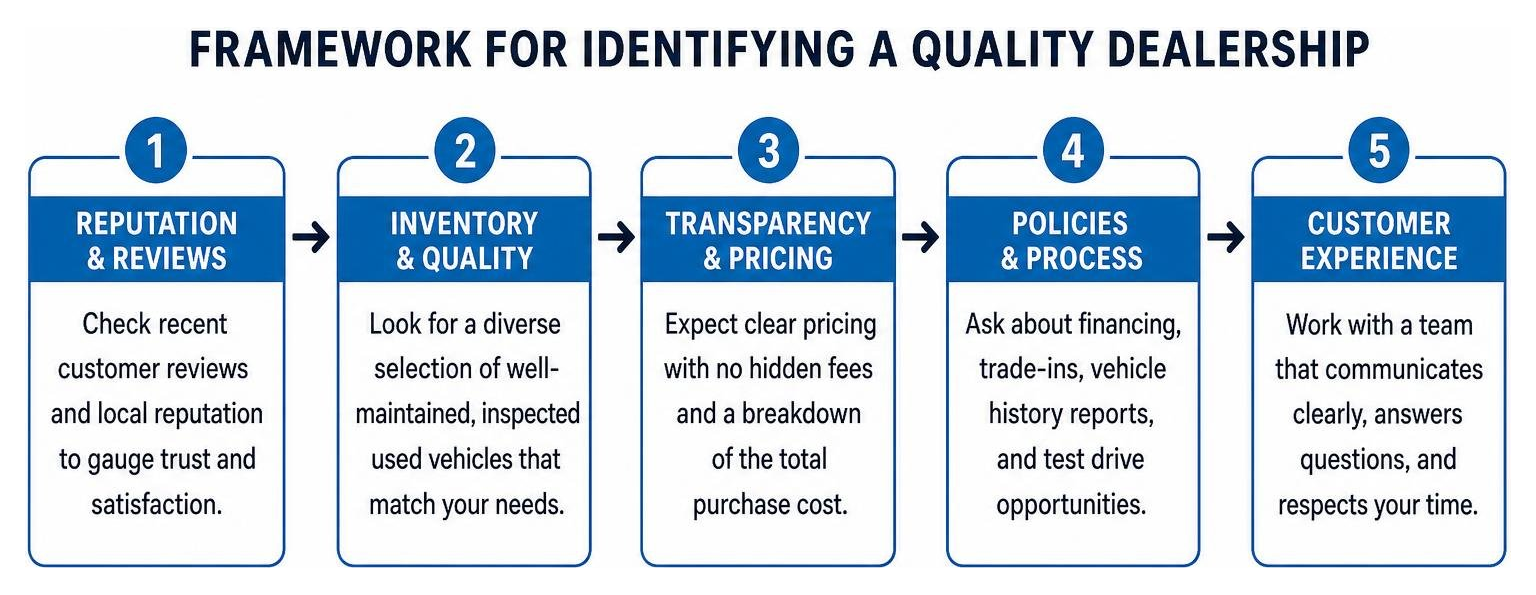
A dealership's history tells you a lot about its stability and business ethics. Stores that have served their communities for decades often rely on repeat business and local referrals. However, long history alone is not enough; the daily operations must be driven by strong internal leadership. Research into top automotive organizations shows that a leadership team prioritizing employee well-being directly improves how shoppers are treated on the showroom floor. When team members feel supported, they have the freedom to focus on helping buyers rather than rushing transactions. You can read more about this management style in this feature on People-First Leadership Recognition.
Another vital element is a diverse and well-curated inventory. Top dealers maintain a rich selection of pre-owned cars, trucks, and SUVs so buyers do not feel forced into a vehicle that does not fit their lifestyle or budget. At our store, we maintain a robust Used Inventory filled with thoroughly inspected options to match various commuting needs across Lithia Springs and Greater Atlanta.
Here is a quick summary list of the core qualities found in top auto dealers:
- Transparent Pricing: Clear itemization of vehicle costs without hidden fees or forced add-ons.
- Supportive Workplace Culture: A motivated, long-term sales and service staff that values client relationships.
- Broad Vehicle Selection: Multiple makes, models, and price tiers available on site.
- Rigorous Inspection Process: Detailed mechanical checks before any pre-owned vehicle reaches the lot.
- Streamlined Trade and Finance Tools: Easy online applications and transparent vehicle trade valuation.
What to Expect From the Best Auto Sales Customer Service
Customer service in the automotive industry has evolved significantly over the years. High-pressure sales scripts and pushy tactics are relics of the past. Today, the best auto sales experiences are defined by clear communication, active listening, and a complete lack of purchase pressure.
To understand why long-term customer relationships matter so much in car sales, we can look back at sales history. Automotive Hall of Fame honoree Joe Girard revolutionized retail vehicle sales by focusing entirely on personal connection and client retention. Girard became famous for developing the "Law of 250," an observation that the average person has roughly 250 people in their immediate social circle—meaning a single poor experience can alienate up to 250 potential future buyers, while a fantastic experience can open the door to hundreds of referrals. You can learn more about his historic career by reading about the Legacy of Joe Girard.
When you visit a high-performing dealership, you should expect staff members who take time to understand your daily commute, budget parameters, and family cargo requirements. They will offer transparent answers regarding vehicle history, previous maintenance, and total out-of-the-door pricing. Check out our real customer feedback on our Reviews page to see how a dedicated team operates in practice.
Evaluating Dealership Reputation and Award History
Beyond word-of-mouth recommendations, objective third-party industry awards offer strong evidence of a dealership's operational excellence. Honors such as General Motors' "Dealer of the Year" or inclusions on national "Best Dealers to Work For" lists signal that a dealership excels in both sales volume and operational ethics.
However, modern shoppers should also know how to read digital ratings effectively:
- Focus on Recent Review Windows: Many major listing platforms require a dealership to accumulate a set number of reviews within the past 24 months (often five or more) to display an active public star score. A dealership might have dozens of older positive reviews, but if they have not logged recent activity, their aggregate score may not reflect current service levels.
- Look for Patterns in Feedback: Look past single outlier reviews. Instead, search for consistent themes regarding staff professionalism, service center turnaround times, and trade-in fairness.
- Analyze Dealership Responses: How a management team responds to constructive customer feedback on public forums reveals their commitment to continuous improvement.
Comparing Inventory, Pricing, and Specializations
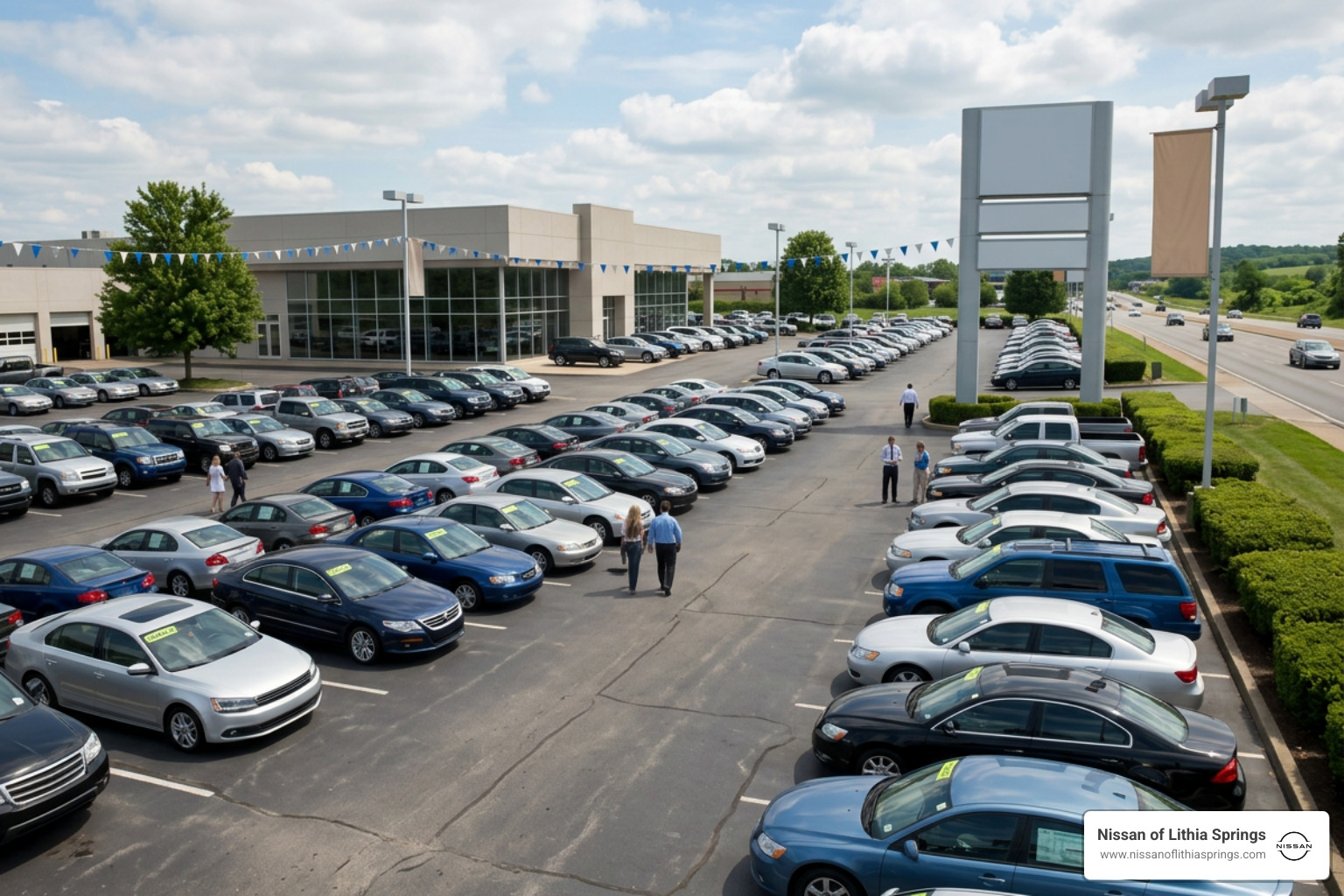
Finding the right pre-owned vehicle often comes down to choosing between different dealership operational models. Some buyers prefer small, highly specialized local car lots, while others prefer larger multi-brand dealership groups or franchised dealer outlets.
Small independent lots often operate with lean overhead costs and small physical spaces. By keeping facility expenses low, they may offer competitive sticker prices on select older models. On the other hand, established dealership groups typically provide wider inventory access, dedicated service bays, and manufacturer-backed certification programs.
For buyers seeking maximum peace of mind, exploring a factory-backed certified program is often the ideal middle ground. Vehicles in our Certified Inventory must pass stringent multi-point inspections and come with extended warranty coverage that standard used cars do not carry.
To help you compare your options, here is a breakdown of how different dealership setups match up:
| Feature / Criteria | Small Specialized Lots | Large Multi-Brand Groups | Franchised Certified Pre-Owned (CPO) Dealers |
|---|---|---|---|
| Inventory Size | Limited (10–50 vehicles) | Massive (500–1,000+ vehicles) | Moderate to Large (100–300+ vehicles) |
| Vehicle Specialization | Specific niches (e.g., vans, budget cars) | Broad across multiple brands | Focused on brand-specific CPO & quality pre-owned |
| Overhead & Pricing Structure | Lean facilities, low overhead focus | Volume-based pricing across regions | Transparent market pricing with added warranty value |
| Reconditioning & Service | Varies; may use outside shops | On-site reconditioning hubs | Factory-trained technicians & OEM replacement parts |
| Financing & Trade Options | Basic local lender options | Extensive regional lender network | Flexible financing, national OEM rates & instant trade tools |
Comparing Best Auto Sales Pricing and Financing Options
Navigating automotive financing does not need to feel confusing. The best auto sales processes provide clear financing paths structured around explicit budget tiers. Whether you are looking for an affordable commuter car under $15,000 or a late-model pre-owned SUV with low mileage, working with transparent payment calculators helps you plan effectively before you step onto the lot.
Before visiting a showroom, use our online Payment Calculator to estimate your potential monthly payments based on loan terms, interest rates, and down payments. If you need assistance gathering initial capital, explore available Down Payment Assistance programs that can help lower your upfront out-of-pocket costs.
When evaluating pricing, always ensure you are considering the complete picture:
- Trade-in Equity: Use trusted valuation platforms like the KBB Instant Cash Offer tool to determine your current car's actual market value.
- Current Dealer Promotions: Review pre-owned vehicle Specials to find temporary rate reductions or price drops.
- Total Purchase Price: Always verify taxes, state registration fees, and documentation fees rather than focusing strictly on the monthly payment figure.
Vehicle Specializations and Inspection Standards
Different drivers have distinct vehicle requirements. A contractor may need specialized cargo vans or heavy-duty work trucks, while a daily commuter traveling along I-20 into Atlanta will likely prioritize fuel economy and driver-assist tech.
If saving money at the pump is your top priority, check out our selection of Fuel Efficient Vehicles. These models undergo rigorous road and mechanical evaluations to guarantee their engine systems, hybrid batteries, and transmissions operate efficiently.
Every pre-owned car should go through a comprehensive multi-step reconditioning sequence before being put up for sale:
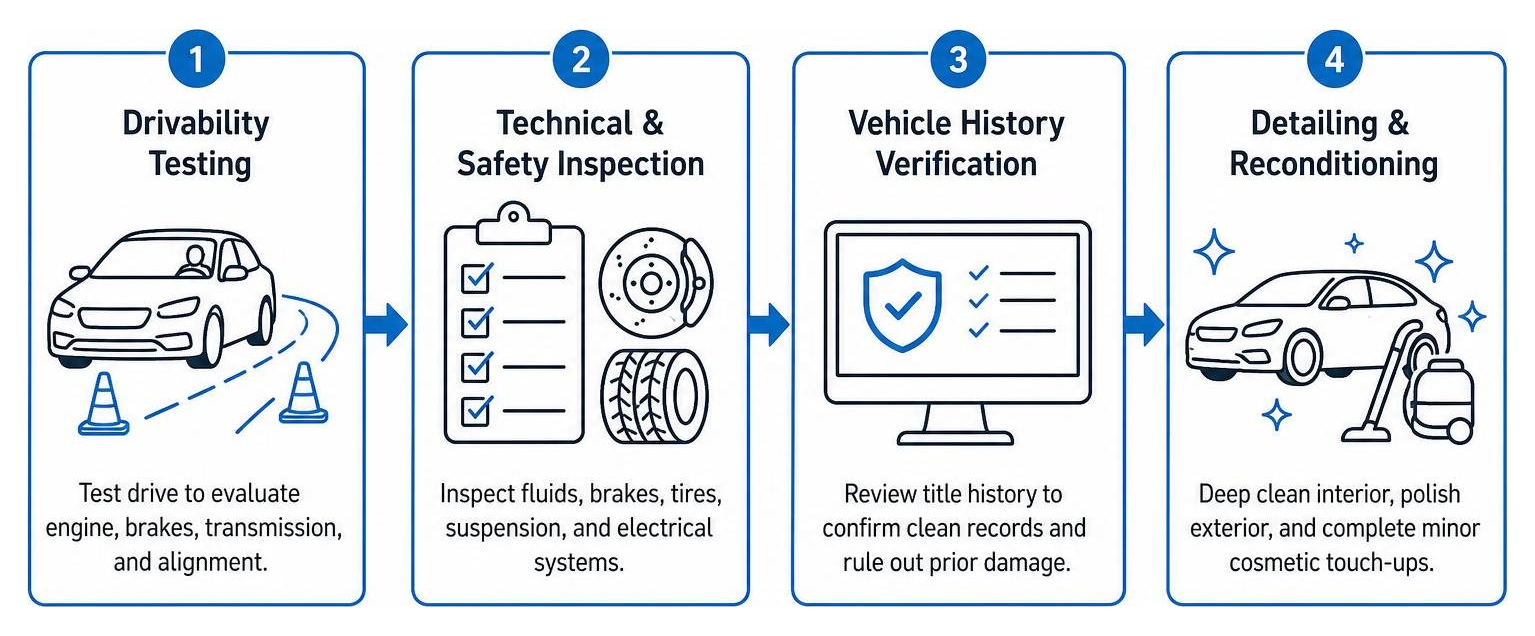
- Drivability Testing: Test drivers evaluate engine responsiveness, braking distance, transmission shifts, and alignment stability under real road conditions.
- Technical & Safety Inspection: Certified technicians check vital fluids, brake pad thickness, tire tread depth, suspension components, and electrical systems.
- Vehicle History Verification: Staff members review title history to confirm clean ownership records and rule out past flood damage or structural accidents.
- Detailing & Reconditioning: The vehicle undergoes deep interior steam cleaning, exterior polishing, and minor cosmetic touch-ups.
Essential Steps to Trade In and Buy Without Hassle

Trading in your current car and purchasing your next pre-owned vehicle can be a seamless, single-day experience when you follow a structured plan. Preparing your documentation and completing digital steps ahead of time eliminates showroom waiting time.
Follow this simple checklist for a stress-free trade-in and purchase:
- Gather Vehicle Documents: Locate your car title (or lien payoff details), current vehicle registration, and all set of keys.
- Obtain an Independent Trade Quote: Request an online valuation using our Carfax Trade-In Offer tool to set an accurate benchmark for your vehicle's worth.
- Clean Your Current Vehicle: Remove personal belongings and wash the exterior. A clean car makes physical inspection easier for the appraiser.
- Schedule Your Visit: Book an appointment to Schedule Test Drive on the specific pre-owned models you want to see.
- Inquire About Holding Policies: If you need a day or two to finalize your loan paperwork or insurance transfer, ask the dealer about their vehicle deposit policies to ensure the car is held for you.
Frequently Asked Questions About Finding Used Car Dealers
How do I know if a dealership has good customer ratings?
To gauge a dealership's true customer satisfaction, check recent feedback on major third-party platforms rather than relying solely on overall average star counts. Focus heavily on review history within the last 24 months, as team leadership and customer service standards change over time. Look for consistent comments regarding sales transparency, fair trade appraisals, and friendly post-sale customer support.
What should I look for during a vehicle inspection and test drive?
During your test drive, turn off the audio system for the first few minutes so you can listen closely to the engine, brakes, and suspension over bumps. Test all power features, including air conditioning, windows, infotainment screens, and safety sensors. Always request a full vehicle history report and ask the sales team to explain the mechanical reconditioning steps completed prior to listing the car.
How can I get the best trade-in offer for my current vehicle?
To maximize your trade-in value, gather detailed information about your vehicle's condition, mileage, and trim level, along with complete service records showing regular oil changes and maintenance. Using online tools like our instant trade appraisal platforms provides a real-time market value estimate. Presenting a clean, well-maintained vehicle with all keys and owner manuals helps ensure you receive the top market offer.
Conclusion
Finding the best auto sales dealership does not require hours of stressful negotiations or endless research. By focusing on dealers that prioritize transparent pricing, clear vehicle history, thoroughly inspected inventory, and respectful customer service, you can shop with total confidence.
At Nissan of Lithia Springs, we take pride in offering a stress-free buying environment tailored to West Atlanta drivers. Whether you are looking for a reliable pre-owned sedan, a spacious CPO SUV, or want to explore our company history on our About Us page, our team is here to assist every step of the way.
Ready to upgrade your commute? Get a quick valuation on your current car today through our Sell Us Your Car portal, or stop by our Lithia Springs showroom to experience transparent auto sales firsthand!