Get an Accurate Estimate of Your Vehicle Value Today
Blue Book Car Value Used Cars: How to Estimate It
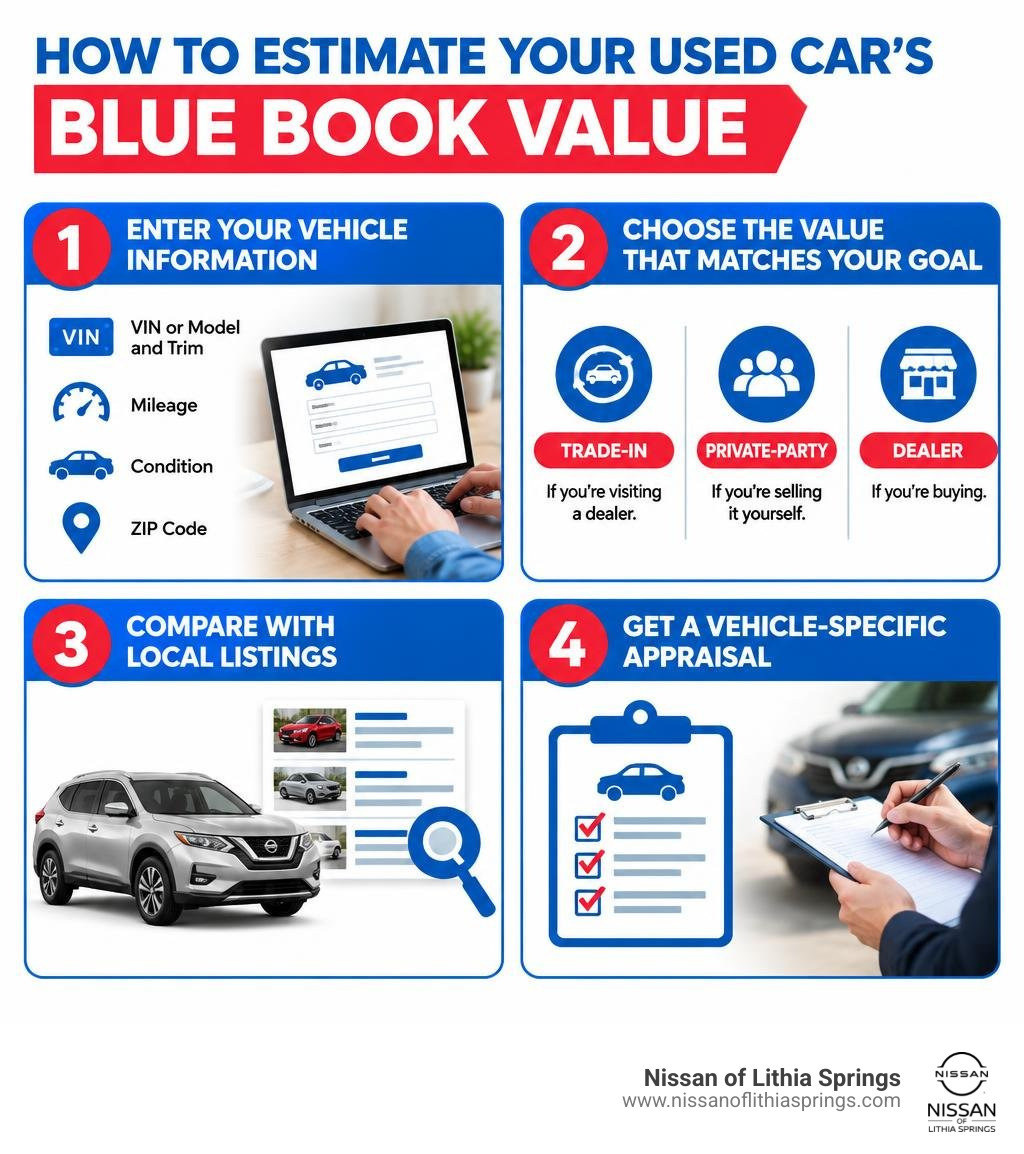
To estimate your used car's blue book value, enter its VIN or exact model and trim, mileage, condition, and ZIP code into a trusted online vehicle valuation tool. Choose the value that matches your goal: trade-in if you're visiting a dealer, private-party if you're selling it yourself, or dealer pricing if you're buying. Then compare the estimate with local listings and a vehicle-specific appraisal. A guide value is a starting point, not a guaranteed offer.
Last reviewed: October 23, 2026. Recheck any estimate against current local listings and a vehicle-specific appraisal before making a purchase or sale decision.
I'm Vaughn Smith, marketing director for Smith Automotive Group. My dealership and analytics experience helps me explain how to determine blue book car value for used cars, giving shoppers in Lithia Springs and nearby communities practical valuation steps.
Disclaimer: This content is for informational purposes only. Vehicle maintenance, diagnostics, and mechanical repairs should only be completed by a certified Nissan technician. Please consult our service department and your vehicle owner's manual before conducting any repairs.
Understanding Used-Car Values: How Appraisals Work
Determining the fair market worth of a pre-owned vehicle requires more than a quick guess. A useful estimate considers the vehicle's year, make, model, trim, mileage, condition, location, and the type of transaction.
Market conditions, vehicle demand, and comparable local listings can influence an estimate. Because each valuation provider uses its own methodology, compare more than one relevant data point and treat the result as a planning reference rather than a promised sale price.

Core Pricing Types: Trade-In, Private Party, and Retail Values
Understanding vehicle valuation starts with recognizing that a single car carries multiple price figures depending on the transaction context. Valuation guides separate figures into three primary tiers:
| Valuation Tier | Definition | Best Used For | Typical Spread Context |
|---|---|---|---|
| Trade-In Value | The wholesale amount a dealership pays to purchase your vehicle. | Trading in toward another purchase or selling outright to a dealer. | Lowest tier due to required dealer reconditioning, safety checks, and wholesale margin. |
| Private-Party Value | The estimated transaction price between two individual buyers/sellers. | Selling a car on classified sites directly to another consumer. | Sits between wholesale and retail; requires seller to manage marketing and title paperwork. |
| Dealer Retail Value (Fair Purchase Price) | The realistic price a buyer should expect to pay at a licensed dealership. | Budgeting for a pre-owned purchase from a certified dealer inventory. | Highest tier; includes safety inspection, reconditioning, warranty support, and overhead. |
The gap between these numbers reflects overhead and convenience. While a private-party transaction might show a higher top-line number, dealer retail includes comprehensive vehicle preparation, vehicle history verification, and title processing.
Data Sources, Regional Adjustments, and Weekly Updates
Vehicle values can change as local supply, demand, vehicle condition, mileage, and transaction context change. Confirm the date of any estimate and compare it with current local listings and a dealership appraisal.
Local demand plays an enormous role in pricing. A four-wheel-drive truck or a three-row family SUV often commands stronger demand in Georgia suburban corridors than an ultra-compact commuter vehicle. To learn more about how localized data impacts your vehicle's appraisal, check our guide on how to estimate the value of your car.
Step-by-Step Guide to Estimating Your Pre-Owned Vehicle’s Worth

To establish an accurate Blue Book car value, used cars require entering precise vehicle details into an online pricing tool. Even small errors in trim level or optional packages can alter an estimate by hundreds of dollars.
How to Estimate Used-Car Value Step by Step
Follow this structured approach to obtain a realistic appraisal baseline:
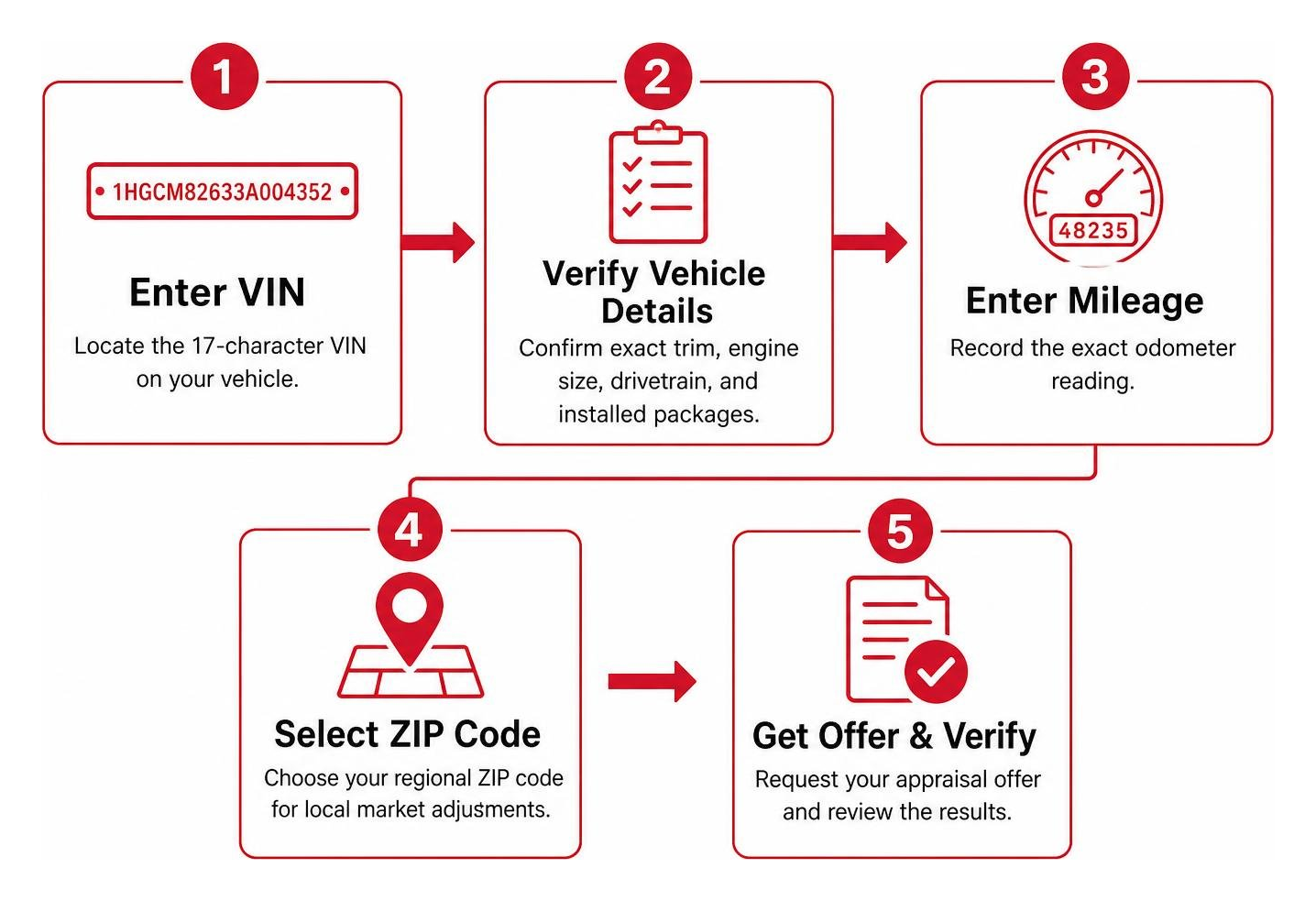
- Locate the Vehicle Identification Number (VIN): Find the 17-character VIN on your vehicle registration, insurance card, or on the driver-side dashboard base. You can use the National Highway Traffic Safety Administration VIN Decoder to confirm basic vehicle-identification details.
- Decode Trim and Equipment: Select the exact trim (such as SV, SL, SR, or Platinum). Verify engine size, drivetrain (FWD, AWD, RWD, or 4WD), and installed packages.
- Record Accurate Mileage: Enter the exact odometer reading rather than relying on a mileage estimate.
- Choose Your Regional ZIP Code: Local market adjustments are applied automatically based on regional supply and buyer demand.
- Request an Appraisal Offer: You can generate a personalized figure using our online trade appraisal tool or evaluate your vehicle through a Carfax Trade-In Offer.
Gathering Vehicle History, Documentation, and Accurate Mileage
A clean vehicle history is essential to achieving top appraisal value. Pricing algorithms and dealership evaluators examine:
- Documented Maintenance Records: Routine oil changes, tire rotations, and scheduled service visits prove mechanical care.
- Title Branding: Clean titles hold standard market value. Salvage, rebuilt, flood, or lemon-law buyback titles reduce vehicle value substantially.
- Accident and Damage History: Reported structural damage, airbag deployment, or prior accident damage can affect an appraisal and may require a closer inspection.
- Odometer Integrity: Review the vehicle's reported mileage history for inconsistencies. The National Motor Vehicle Title Information System explains how its approved providers can help buyers access title, brand, odometer, and salvage-history information.
Key Factors That Impact Used Vehicle Market Pricing
Vehicles experience different depreciation rates based on reliability history, segment popularity, and maintenance upkeep. While luxury sedans might lose value quickly, versatile pickup trucks and compact SUVs often hold their equity longer.
Physical Condition Ratings and Mechanical Integrity
When using valuation guides, vehicle owners often default to selecting the top tier. However, pricing guides follow strict definitions for condition ratings:
| Condition Tier | Typical Exterior / Interior Standards | Mechanical & Tire Criteria |
|---|---|---|
| Excellent | Flawless paint and body panels, with no noticeable dings, chips, scratches, or interior wear. | Complete maintenance records, strong tire tread, and no known mechanical concerns. |
| Very Good | Minor cosmetic imperfections and a clean cabin without significant tears or stains. | Equipment operates properly, with usable tire tread and no known major repairs needed. |
| Good | Normal wear, such as light scratches, small door dings, or minor interior blemishes consistent with age. | The vehicle is operable, though routine maintenance or wear-item replacement may be needed. |
| Fair | Noticeable dents, paint fading, rust, or visible upholstery damage. | The vehicle may need service, tire replacement, or additional inspection before sale. |
Choose the condition tier conservatively and document visible wear, needed repairs, and tire condition before relying on an estimate.
Market Demand, Seasonality, and Vehicle Options
Macro factors and equipment choices shift values throughout the year:
- Powertrain and Fuel Economy: High efficiency models gain traction during fuel price surges, while all-wheel-drive configurations command higher seasonal demand heading into winter.
- Factory Feature Packages: Modern safety suites, premium audio, towing packages, and leather seating provide noticeable valuation bumps on pre-owned lots.
- Wear Items: Technicians inspect brake pad thickness, battery health, and tire tread depth. Replacing worn tires or resolving warning lights helps maximize your trade equity.
How to Leverage Appraisal Values for Buying and Selling Negotiations

Research pricing benchmarks before shopping so you can compare an asking price, a trade-in offer, and nearby listings using the same vehicle details.
Closing the Private Party Versus Dealership Trade-In Gap
When deciding how to sell your vehicle, compare the convenience and speed of a dealer trade-in against the extra effort required for a private-party listing.
In a private sale, the seller handles photography, listing fees, test drives with strangers, loan payoff delays, and title transfers. By contrast, trading your vehicle into a dealership provides an instant transaction. In many jurisdictions, trading in your vehicle also offers a sales tax credit, where you only pay state sales tax on the price difference between your new vehicle and your trade allowance. To see how these options compare, review our breakdown of trading in vs selling your vehicle.
Comparing Pricing Tools: Valuation Guides and Live Listings
Do not rely on a single data point. Cross-reference valuation guides with live local inventory to see what similar vehicles command in your immediate area. Explore our inventory of quality used cars to see how clean, inspected pre-owned models are priced in real market conditions.
If you are planning your next vehicle upgrade, explore our budget-friendly selections:
- Used Cars Under $15,000 For Sale
- Used Cars Under $20,000 For Sale
- Cars Under $25,000 For Sale
- Cars Under $30,000 For Sale
You can also use our payment calculator to see how your trade equity directly lowers your estimated monthly loan structure, or submit a finance application online to get pre-approved.
Common Mistakes When Evaluating Used-Car Values
To ensure your valuation estimate aligns with realistic market expectations, avoid these common missteps:
- Selecting the "Excellent" Tier Prematurely: Reserve this rating for vehicles with exceptionally clean cosmetic and mechanical condition.
- Using an Incorrect ZIP Code: Regional supply differences mean values in one state do not mirror market realities in another.
- Overlooking Aftermarket Modifications: Custom wheels, lift kits, or aftermarket stereo systems rarely add book value and can sometimes lower trade appeal.
- Ignoring Outstanding Loan Balances: Subtract your current payoff amount from the vehicle's estimated value to calculate your true positive or negative equity.
Frequently Asked Questions About Used Vehicle Valuation
How often are vehicle valuation guides updated for regional markets?
Update practices vary by valuation provider. Before relying on an estimate, check the date shown by the provider, enter current vehicle details, and compare the result with nearby listings and a vehicle-specific appraisal.
Why is the trade-in offer lower than the private party listing price?
A trade-in valuation represents wholesale value. Dealerships invest in multi-point safety inspections, professional reconditioning, cosmetic repairs, maintenance updates, and statutory warranties before offering a vehicle for retail sale. Private party prices reflect direct consumer sales where the buyer takes on all vehicle condition risks.
Can a vehicle history report significantly change an appraisal?
Yes. Documented structural damage, airbag deployments, salvage or flood brands, and major accident histories can affect an appraisal compared with a similar clean-history vehicle. Detailed service records can also give an appraiser more complete information about the vehicle's care and condition.
Conclusion
Understanding pre-owned car valuation equips you to make smart, confident financial decisions whether you plan to trade, sell, or purchase your next daily driver. At Nissan of Lithia Springs, our certified technicians inspect pre-owned vehicles daily, ensuring transparent valuations and dependable inventory for drivers throughout Lithia Springs, Douglasville, Austell, Mableton, and Powder Springs.
If you are ready to explore your options, you can value your trade online, request a direct cash offer to sell us your car, or browse our premium certified inventory today.