
Nissan Multi-Point Inspection: What Drivers Should Know
What Happens During a Vehicle Multi Point Inspection?
A comprehensive vehicle assessment is a structured review designed to evaluate the physical and mechanical condition of critical components. Rather than focusing only on a single symptom, a technician follows an organized workflow to inspect the car from top to bottom. This includes an under-hood inspection, interior and safety control checks, an undercarriage examination, and detailed measurements of high-wear items such as tires and brakes.
In most modern service bays, the entire evaluation takes between 20 to 30 minutes to complete. This timeframe allows a certified technician to inspect dozens of individual points methodically without keeping you waiting unnecessarily. Technicians use organized inspection processes and comprehensive vehicle inspection checklist standards to document the condition of key vehicle systems and identify items that may need attention. The dealership’s Nissan complimentary multi-point inspection form provides a Nissan-specific reference for the inspection process.
Key Systems Evaluated in a Multi Point Inspection
During the assessment, technicians examine several interconnected mechanical and electrical areas to ensure that your vehicle remains safe and dependable:
- Engine Bay Components: Inspecting accessory drive belts, coolant hoses, wiring harnesses, and fluid reservoirs for signs of cracking, leaking, or deterioration.
- Battery and Electrical: Performing electronic battery voltage testing and inspecting terminal connections for corrosion to avoid unexpected starting issues.
- Braking Hardware: Measuring friction material thickness on disc pads and shoes, alongside visual checks of hydraulic lines, calipers, and rotors.
- Tires and Wheels: Evaluating remaining tread depth across all grooves, analyzing uneven wear patterns, and confirming proper inflation pressure at our routine tire and alignment maintenance facility.
- Suspension and Steering: Examining shock absorbers, struts, ball joints, control arm bushings, and tie rods for excessive play or torn rubber boots.
How a Multi Point Inspection Differs from State Safety Inspections
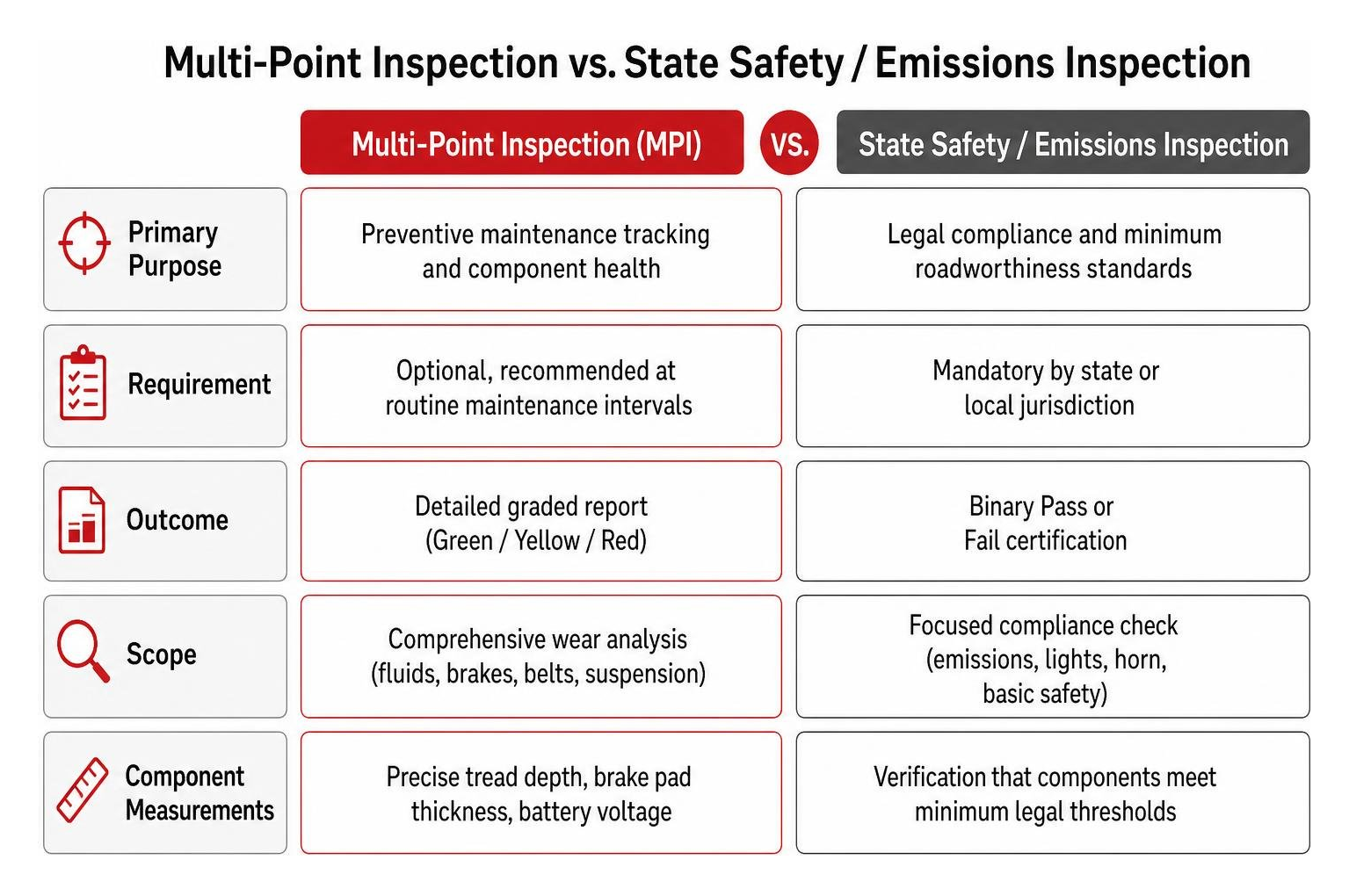
It is important to understand that a multi-point inspection and a state-mandated safety or emissions inspection serve distinct purposes. State safety inspections are legally required annual evaluations with strict pass-fail criteria designed to ensure a vehicle meets minimum legal operating standards. They typically focus on basic safety hardware, such as glass integrity, wiper operation, horn functionality, and emissions compliance.
In contrast, a multi-point inspection is a proactive health check. It tracks the gradual progression of wear over time so you can address maintenance items before they turn into costly mechanical failures or cause a failed state inspection.
| Feature / Aspect | Multi-Point Inspection (MPI) | State Safety / Emissions Inspection |
|---|---|---|
| Primary Purpose | Preventive maintenance tracking and component health | Legal compliance and minimum roadworthiness standards |
| Requirement | Optional, recommended at routine maintenance intervals | Mandatory by state or local jurisdiction |
| Outcome | Detailed graded report (Green / Yellow / Red) | Binary Pass or Fail certification |
| Scope | Comprehensive wear analysis (fluids, brakes, belts, suspension) | Focused compliance check (emissions, lights, horn, basic safety) |
| Component Measurements | Precise tread depth, brake pad thickness, battery voltage | Verification that components meet minimum legal thresholds |
Core Systems Checked During a Comprehensive Inspection
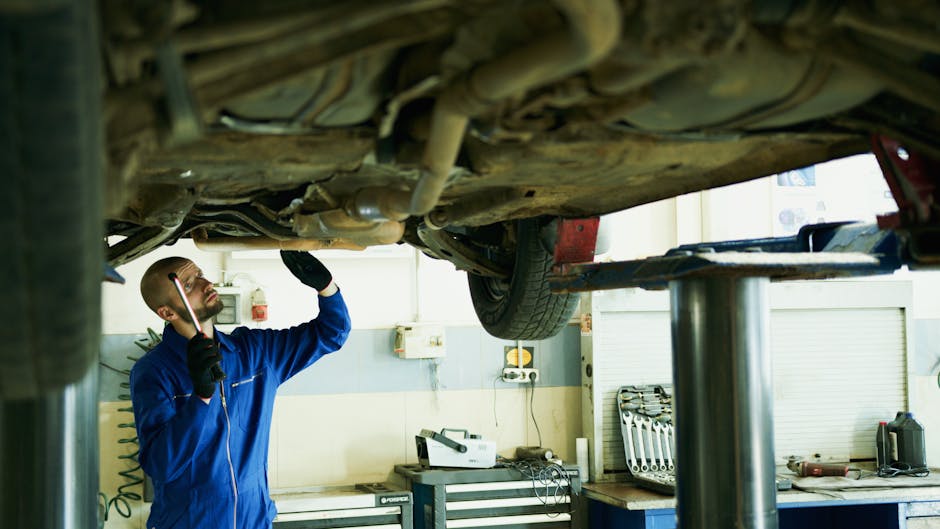
When a vehicle is raised on a lift, a technician gains direct visual and physical access to the undercarriage and running gear. Using standardized checklists aligned with standardized automotive inspection forms, the inspection covers components that are hidden from view during normal driving.
Technicians examine the complete exhaust system for rust perforations, damaged hangers, or loose heat shields. Steering linkages and constant-velocity (CV) axle boots are checked for structural integrity and grease leakage. In addition, the drivetrain is inspected to confirm that differentials, transfer cases, and transmission housings are free from active fluid leaks.
Fluid Levels, Filters, and Electrical Systems
Fluids are the lifeblood of every vehicle powertrain. Technicians assess both the level and the condition of several key fluids:
- Engine Oil: Checking fluid level, viscosity, and signs of contamination or thermal breakdown.
- Transmission Fluid: Verifying correct operating levels and checking for discoloration or burnt odors.
- Brake Fluid: Checking reservoir levels and inspecting moisture content or clarity to preserve stopping performance.
- Engine Coolant: Evaluating freeze/boil protection levels and checking recovery reservoirs for sediment.
- Filters: Inspecting the engine air intake filter for debris and checking the interior cabin air filter for dust and pollen accumulation.
- 12-Volt Battery: Testing cold cranking amps (CCA), terminal tightness, and mounting security.
Brakes, Tires, and Suspension Geometry
Brakes and tires represent your vehicle's direct physical contact with the road. Technicians measure brake pad lining thickness using calibrated gauges or micrometers. When disc pads wear down toward critical thresholds, replacing them with genuine OEM replacement components helps protect brake rotors from grooving and heat damage.
Tire condition is checked across the tread surface. Measurements at 7/32-inch or greater indicate healthy tread, while levels approaching 3/32-inch or lower signal the need for replacement. Technicians also check for cupping, feathering, or shoulder wear, which often points to worn suspension bushings, aging shock absorbers, or misaligned wheels.
Digital Inspection Reports and Traffic Light Color Codes

Modern automotive service centers have transitioned from paper checklists to digital multi-point inspection platforms. Using tablet-based systems powered by dealership digital MPI workflow technology, technicians capture real-time notes, high-resolution photographs, and short video clips of their findings directly at the service bay.
These digital records link directly to the vehicle's electronic repair order. Instead of trying to decipher handwritten notes, vehicle owners receive a clean, easy-to-read report via text message or email. This visual evidence allows drivers to see exact measurements, fluid discoloration, or damaged parts before authorizing any work.
Understanding the Green, Yellow, and Red Classification
Digital inspection reports use an intuitive traffic-light color system to categorize the condition of every inspected item:
- Green (Passed Condition): The component is operating within normal manufacturer specifications and requires no service at this time.
- Yellow (Future Maintenance Required): The item shows normal wear and remains functional for now, but will require attention or replacement during an upcoming service visit.
- Red (Immediate Attention Required): The component has failed, is worn beyond safe operational limits, or poses a safety hazard that requires immediate repair.
This tiered classification removes guesswork, giving vehicle owners a clear breakdown of urgent repairs versus maintenance items that can be planned for future visits.
Tracking Vehicle History for Long-Term Reliability
Digital multi-point inspections create an electronic maintenance record that follows your vehicle over time. By archiving past inspection reports, service advisors can identify wear trends, such as how quickly brake pads or tire treads are wearing based on your driving habits.
Consistent digital documentation also helps maintain warranty compliance by proving that routine checks and fluid services were performed on schedule. When the time comes to sell or trade in your car, a documented history of passing inspection scores can help support higher resale value.
Inspection Frequency, Costs, and Practical Ownership Benefits
Routine multi-point inspections provide peace of mind by catching small issues before they become expensive repairs. Many factory dealerships offer these health checks as a complimentary standard practice during routine maintenance visits.
Multi-point inspections are also an essential part of evaluating pre-owned vehicles. For instance, models in our rigorous certified pre-owned multi-point standards program must pass an extensive 167-point inspection to earn factory certification, setting them apart from ordinary used cars.
Recommended Service Intervals
To keep your vehicle operating reliably, plan to have an inspection conducted during every routine maintenance milestone:
- Every 5,000 to 7,500 Miles: Combine an inspection with each scheduled engine oil and filter change or tire rotation.
- Seasonal Weather Transitions: Schedule an inspection before intense summer heat or winter cold snaps to verify battery health, coolant concentration, and tire condition.
- Pre-Road Trip Preparations: Have your vehicle evaluated before extended highway journeys to ensure brakes, belts, and fluid levels are road-ready.
- Unusual Symptoms: Request an evaluation if you notice strange vibrations, fluid spots on your driveway, or changes in pedal feel.
Demanding Everyday Driving and Towing Demands
Vehicles that handle heavy commuter traffic, frequent short trips, or regular towing face elevated mechanical stress. Stop-and-go driving accelerates brake and transmission wear, while summer heat places extra demand on cooling systems and electrical components.
For truck owners who haul payload or tow equipment, routine inspections are critical. Trucks like the durable midsize truck utility benefit from regular checks of differential lubricants, transfer case fluids on four-wheel-drive configurations, suspension leaf springs, and hitch receiver hardware to verify that all systems remain ready for demanding work.
Frequently Asked Questions About Multi-Point Inspections
How long does a standard multi-point inspection take to complete?
A standard multi-point inspection typically takes between 20 and 30 minutes when performed by a factory-trained technician. Because the inspection is structured to run alongside routine tasks such as an engine oil change or tire rotation, it adds minimal time to your service appointment.
Is a multi-point inspection the same as a pre-purchase inspection?
While both evaluations assess vehicle health, a multi-point inspection is designed for ongoing maintenance tracking on an operational vehicle. A pre-purchase inspection on an inspected pre-owned vehicle inventory candidate often includes deeper diagnostic scans, paint depth checks, and structural body examinations to verify past accident history and prior ownership care.
Can regular multi-point inspections prevent major mechanical breakdowns?
Yes. Regular inspections identify minor issues, such as a weeping water pump gasket, hairline serpentine belt cracks, or low brake fluid levels, before they cause catastrophic component failure. Addressing these items early protects other connected engine and drivetrain systems, saving vehicle owners significant repair costs over the life of the vehicle.
Conclusion
A regular multi-point inspection is one of the easiest and most practical ways to protect your vehicle investment and maintain everyday reliability. At Nissan of Lithia Springs, our factory-trained and certified Nissan technicians perform comprehensive multi-point inspections every day for drivers across Lithia Springs, Douglasville, Austell, and the greater west Atlanta area.
Whether you are preparing for daily commuting, heavy work tasks, or a family road trip, our service team is here to provide clear, transparent inspection reports you can trust. Schedule a certified Nissan multi-point inspection with us today to keep your vehicle running at its best.
Disclaimer: This content is for informational purposes only. Vehicle maintenance and repairs should only be completed by a certified Nissan technician. Please consult our service department and your vehicle owner's manual before conducting any repairs.